Signs You Need Foundation Repair in Colorado Springs (and Signs You Don’t)
The clearest signs are cracks that keep growing, floors that slope toward one corner, doors and windows that stick year-round, and basement walls that bow inward. On Colorado Springs clay, many other cracks are normal and never need repair. Walk your house with the checklist below, then recheck in a few months.
We reply within 1 business hour.
Last updated 5 October 2026
Why Colorado Springs houses show these signs
Most of the warning signs below come from the ground moving under the house.
Much of the city sits on expansive clay and Pierre Shale. The Colorado Geological Survey says this kind of soil “may expand 10 percent or more as the clay becomes wet.” When it dries out, it shrinks again. One side of a house often gets wetter than the other, from a downspout, a sprinkler or a low spot in the yard, so one corner rises or drops more than the rest.
That’s also why the signs come and go with the seasons. A crack can look scary in April and barely show in September. For the full picture of what’s under the city, see our guide on whether you need a structural engineer.
Outside the house
Walk all the way around the outside first. Take your phone and photograph anything you find.
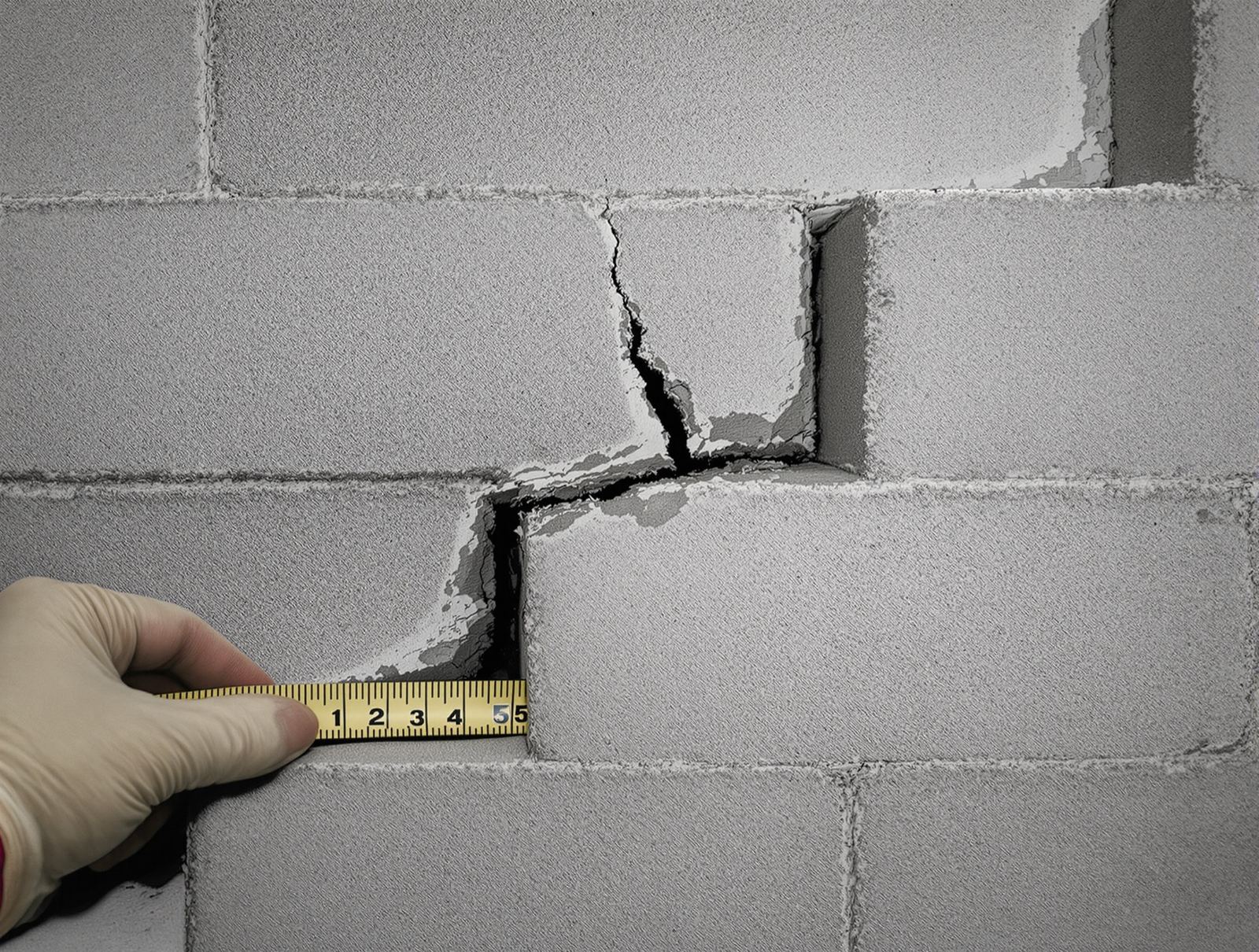
- Stair-step cracks in brick or block. Cracks that zigzag along the mortar lines, often wider at one end.
- Gaps around window and door frames. Brick or siding pulling away from the frame, or caulk that keeps splitting in the same place.
- A gap between the soil and the foundation. In a dry late summer, clay can shrink away from the wall and leave a gap you can fit a finger into. That’s a sign the soil is moving, and it’s a place water will pour in next storm.
- Soil sloping toward the house. The ground should fall away from the foundation. If it slopes in, water collects against the wall.
- Downspouts dumping right beside the wall. Not a sign of damage yet, but the most common cause of it.
- A chimney leaning or separating from the side of the house.
- Patios, walkways or driveways that have heaved or sunk, especially near the house.
Inside: walls, ceilings and floors
- Diagonal cracks running up from the corners of doors and windows. Short, straight hairlines are common. Cracks that angle out from a corner and keep lengthening are worth watching.
- Gaps where walls meet the ceiling or floor, or crown molding pulling away.
- Floors that slope. Put a marble on the floor, or use a level app on your phone. If the marble rolls the same direction every time, toward one wall or corner, note it.
- Floors that dip in the middle of the house. That often points to crawl space supports rather than the foundation itself (see crawl space repair).
- Cracks in tile floors that line up with each other across several tiles.
- Kitchen cabinets or countertops pulling away from the wall.
For what these symptoms usually mean, see how serious a cracked foundation is (FAQ hub).
Doors and windows
- Doors that stick or won’t latch, especially if they worked fine before.
- Doors that swing open or shut on their own, which means the frame is no longer square.
- Uneven gaps above a door, wider on one side than the other.
- Windows that are suddenly hard to open or lock.
The key question is timing. Sticking that shows up after a wet week and goes away is the clay swelling and settling back. Sticking that stays through every season is a better reason to have someone look.
Basement and crawl space
- Horizontal cracks in a basement wall, especially in block walls. These can mean soil pressure is pushing the wall inward, and they deserve a professional look sooner than most cracks.
- A wall that bows or leans in. Hold a long straightedge or a taut string against it to check.
- Water coming in along a crack or where the wall meets the floor.
- White, chalky residue on concrete walls. It’s left behind by water moving through the wall.
- A basement floor that has cracked and lifted, with one side of the crack higher than the other.
- In a crawl space: wet soil, sagging beams, or support posts that have sunk or tilted.
Signs that usually aren’t a foundation problem
Plenty of things look alarming but are normal on Front Range clay:
- Hairline cracks in a concrete floor or wall that stay the same size. Concrete shrinks as it cures, and most slabs crack a little.
- Drywall nail pops, the small round bumps along a wall or ceiling. They’re usually framing lumber drying out.
- Short cracks in a newer house during its first couple of years as it settles in.
- A door that sticks for a few days after heavy rain, then frees up.
- A cracked garage slab or patio on its own. These are usually separate slabs, not part of the foundation holding up your house.
If what you’re seeing is on this list and nothing from the lists above, it’s probably not worth paying for a repair yet. The settling vs structural table on our homepage shows the difference side by side.
How to check a crack yourself
You don’t need special tools. You need a pencil, your phone and a coin.
- Mark both ends of the crack with a pencil and write the date next to each mark.
- Measure the width with a coin. A quarter is 1.75 millimeters thick, according to the US Mint, and a dime is 1.35 millimeters. If the edge of a quarter slides into the crack, it’s at least about 1/16 inch wide.
- Take a photo with a tape measure or ruler held against it.
- Check again in spring and late summer. In Colorado Springs, those are usually the clay’s wettest and driest stretches, so a crack that’s still moving will show it.
- Compare. A crack that’s grown past your pencil marks, or gotten wider, is a crack worth having looked at.
This takes five minutes, and it turns “I’m worried” into something you can show an engineer or contractor.
What to do next
If you found only false alarms, fix any downspouts or grading problems and recheck in a few months.
If you found one or two signs that aren’t getting worse, keep tracking them. Fix the water around the house first, because that’s often all it takes.
If you found cracks that are growing, a bowing wall, or several signs in the same corner of the house, get an independent structural engineer’s opinion before you pay for a repair. Our guide on whether you need a structural engineer explains what they check. For what repairs typically cost here, see foundation repair costs in Colorado Springs. If piers come up, read our helical piers page first.
Foundation warning sign questions
What is usually the first sign of foundation problems?
In Colorado Springs, the first sign is usually a door or window that starts sticking, or a new crack angling up from the corner of a door frame. Neither means there’s damage on its own. Mark any crack with a pencil and a date, and watch whether the sticking goes away when the weather dries out.
Is a horizontal crack in a basement wall serious?
It can be. A horizontal crack, especially in a block wall, often means soil is pushing the wall inward. Check whether the wall is bowing by holding a straightedge against it. If it is, or the crack is getting longer, have a structural engineer look at it soon rather than waiting a season.
Do foundation signs change with the seasons in Colorado?
Yes. Clay soil swells when it’s wet and shrinks when it dries, so cracks and sticking doors often look worse in a wet spring and better in a dry fall, or the other way round. That’s why a single check can mislead you. Look in spring and again in late summer before you decide.
Not sure what you’re looking at?
Pikes Peak Foundation Repair can help you work out whether what you’re seeing is normal settling, something to keep watching, or a reason to call an engineer or contractor. Send us your photos, or call or text (719) 645-7643.